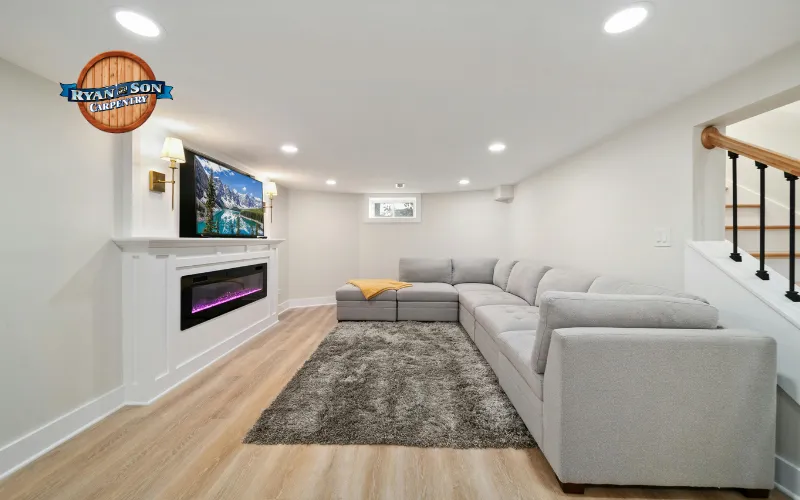
Basement Rooms That Truly Add Space and Comfort
Finishing or upgrading basement rooms is one of the smartest decisions a homeowner can make. It is usable space that already exists. Space you already maintain and pay for. Yet in many homes it stays unfinished, cold, or only used for storage.
Basements do not need to feel dark or forgotten. With the right layout, insulation, and craftsmanship, they can become some of the most comfortable rooms in the home. Family rooms that actually get used. Home offices that stay quiet. Guest bedrooms that feel welcoming. Spaces that work when the rest of the house feels crowded.
This guide breaks down what truly matters when creating basement rooms. Not just surface level design ideas, but the construction details that affect comfort, durability, and value long term. This is where experience makes the difference. And it is why homeowners trust Sean Ryan & Son Carpentry, a local contractor known for honest pricing, clear communication, and basement work done right the first time. If you want a basement that feels like it belongs in your home, not hidden beneath it, you are in the right place.
Key Takeaways
• Basement rooms add living space without changing your homes footprint
• Good planning prevents moisture comfort and layout issues
• Basement rooms should match how your family actually lives
• Professional construction protects value and safety long term
• Small details make basements feel like real rooms not afterthoughts
Why Basement Rooms Make Sense for Homes
Homes in Newton were not built with wasted space in mind. Basements were designed strong and solid. Often full height. That makes them perfect candidates for finished living areas.
Basement rooms are especially valuable because land is limited and additions can be costly. Zoning. Permits. Landscaping. It all adds up fast. A basement conversion avoids much of that.
You gain space without expanding outward. Or upward.
And in New Hampshire weather that matters. Winters are long. Families spend more time indoors. Extra living space becomes essential not optional.
How Finished Basements Improve Daily Life
Basement rooms change how a home functions day to day. Kids get space to play. Parents get quiet when needed. Guests have privacy. Work from home setups finally make sense.
It reduces stress in the rest of the house. Less crowding. Less noise. More breathing room.
And yes. It increases resale value too. Buyers love finished basements when they are done right.
Tip from experience
Basements that feel warm and bright sell faster than ones that just look finished. Comfort matters.
Planning Basement Rooms the Right Way From the Start
The biggest mistake homeowners make is jumping straight into finishes. Flooring. Paint. Furniture. That comes later. Planning comes first.
Basement rooms require thoughtful layout decisions. Where walls go. Where utilities stay accessible. How traffic flows. How rooms connect.
Basements are not blank boxes. They come with beams posts pipes and mechanical systems. Ignoring those leads to awkward spaces.
Layout Decisions That Actually Work
Open layouts work well for basements. They allow flexibility. A family room today can become a media room later. Or split into zones over time.
Bedrooms and bathrooms should be placed carefully. Egress windows are required. Ceiling heights must be respected. Storage should be built in not forgotten.
Good layout makes the basement feel intentional. Not patched together.
Small detail big impact
Align basement walls with upper floor walls when possible. It feels more natural. Hard to explain but easy to feel.

Moisture Insulation and Comfort Matter More Than Looks
Here is where many competitors fall short. They talk about finishes. Rarely about what is behind the walls.
Basement rooms face moisture challenges. Groundwater. Humidity. Seasonal temperature swings. Ignore those and problems follow.
Insulation must be correct. Vapor barriers must be placed properly. Materials must breathe but still protect.
Controlling Moisture Before It Becomes a Problem
Before any finishing begins the basement should be inspected. Foundation walls. Drainage. Existing moisture signs.
Solutions might include sealing walls improving exterior drainage or upgrading insulation systems. It depends on the home.
Skipping this step saves money short term. Costs more later.
Real world example
A basement that smells musty will never feel finished no matter how nice the trim looks.
Temperature Control and Year Round Comfort
Basements should not feel cold in winter or damp in summer. Proper insulation paired with smart HVAC planning solves this.
Zoned heating helps. Dehumidifiers help. Even simple air circulation upgrades can make a huge difference.
Comfort turns basement rooms into everyday rooms. Not just occasional use spaces.
Safety Codes and Long Term Value
Basement rooms are not just design projects. They are structural and safety projects.
Basement rooms must meet local building codes. Fire separation. Electrical standards. Egress windows. Ceiling clearances.
These rules exist for a reason.
Why Code Compliance Protects Homeowners
Proper permits protect resale value. Inspections catch issues early. Insurance claims are safer when work is done correctly.
Professional contractors understand these requirements. DIY or shortcut work often creates problems later. Sometimes expensive ones.
Quiet truth
Buyers ask about permits more often than homeowners expect.
Choosing the Right Contractor Makes All the Difference
Not all contractors understand basements. Some treat them like regular rooms. They are not.
Experience matters. Local experience matters more.
Basement rooms benefit from contractors who understand local soil conditions building styles and climate patterns.
Communication matters too. Clear pricing. Clear timelines. Clear expectations.
A good contractor explains the process. They do not rush decisions. They help you avoid mistakes before they happen.

Conclusion
Basement rooms can completely change how a home feels and functions. When done correctly they blend seamlessly into the rest of the house. They feel warm. Bright. Useful.
Basement rooms offer homeowners a powerful opportunity. More space. More comfort. More value. Without expanding the home.
The key is planning. Proper construction. And working with professionals who understand what basements truly need.
When those pieces come together the basement stops being extra space. It becomes real living space.
Call to Action
If you are thinking about finishing or upgrading your basement rooms, now is the time to plan it right.
Sean Ryan and Son Carpentry brings decades of hands on experience honest pricing and dependable craftsmanship to every project. Contact us today for a free consultation and see what your basement can truly become.
FAQs
How long does it take to finish basement rooms?
Most basement projects take several weeks depending on size layout and complexity. Planning and permitting time should also be considered.
Do basement rooms add value to my home?
Yes finished basements add usable square footage and appeal to buyers especially when built to code and designed for comfort.
Are permits required for basement finishing?
In most cases yes. Permits ensure safety compliance and protect resale value. A professional contractor will handle this process.
Can basements be used as bedrooms?
They can if proper egress windows ceiling height and safety requirements are met. Planning is essential.
What is the biggest mistake homeowners make?
Skipping moisture control and insulation planning. These issues often appear after the space is finished and are costly to fix.
