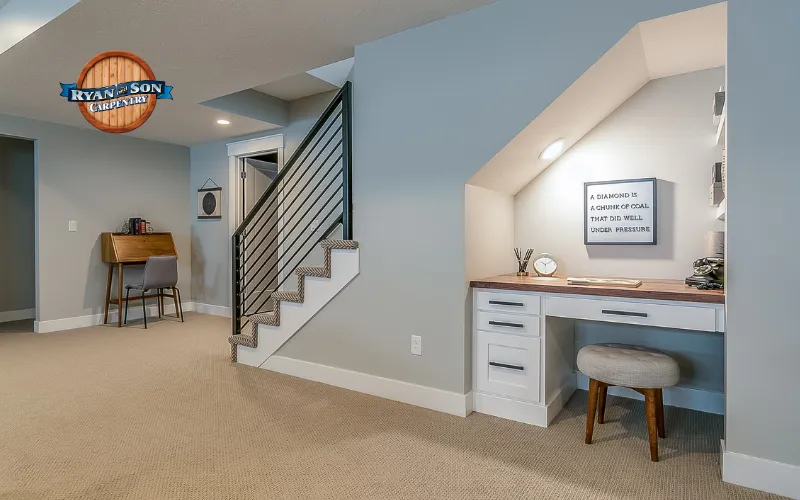
Basement Offices in Newton New Hampshire That Actually Work for Real Life
Basement offices in Newton New Hampshire are no longer a nice idea for later. They are becoming a real need for many households. Working from home is now part of everyday life. Kitchen tables get crowded. Spare bedrooms lose their purpose. Over time the noise builds up and focus disappears.
A basement office changes that. It creates separation where it matters. Mentally and physically. It takes unused space and turns it into something functional and comfortable. When built correctly, basement offices feel just as inviting and usable as rooms on the main level.
This article breaks down what actually goes into building basement offices in Newton New Hampshire and how they connect with larger basement rooms. We will cover planning comfort moisture control lighting and code requirements. These are the details many contractors rush through. That difference is why homeowners continue to choose Sean Ryan & Son Carpentry, a trusted local contractor known for quality workmanship clear communication and basement spaces built to last.
Key Takeaways
• Basement offices create quiet separation from daily home activity
• Planning matters more than furniture choices
• Comfort and moisture control decide long term success
• Basement offices increase usable space and resale appeal
• Professional construction prevents costly mistakes later
Why Basement Offices in Newton New Hampshire Make Sense Now
Homes were not designed for full time remote work. Most families feel that now. Kitchens get loud. Living rooms feel busy. Bedrooms stop feeling restful when work never leaves.
Basement offices in Newton New Hampshire offer a solution without changing the structure of the home. No additions. No lost bedrooms. Just better use of existing space.
Basements are naturally quieter. More private. Less foot traffic. That alone makes them ideal for focused work video calls or client meetings.
They also create boundaries. When work stays in one space it is easier to disconnect at the end of the day. That matters more than people realize.
How Basement Offices Fit Into Finished Basement Rooms
Most basement offices are part of larger basement rooms. They might sit next to a family room. Or share space with a guest area. Good design allows these spaces to work together without interfering.
Walls do not always need to be solid. Glass panels partial walls or sound insulated partitions can create separation while keeping the basement open and bright.
Flexibility is key. Needs change. Families change. A well planned basement office can easily become a bedroom hobby room or study later on.
Tip worth remembering
Design for tomorrow even if today is the priority.
Planning a Basement Office That Feels Right
Basement offices fail when planning is rushed. It happens often. Homeowners jump straight to finishes. Desk placement. Paint colors. Storage ideas.
The real work starts earlier.
Basement offices in Newton New Hampshire need careful attention to layout infrastructure and flow. Where outlets go. Where internet enters. Where lighting lands. Where sound travels.
Ignoring these details leads to awkward uncomfortable spaces.
Layout That Supports How You Work
Every person works differently. Some need wide desks. Some need storage. Some need open space. Layout should reflect that.
Basement posts and beams must be addressed early. They can be framed into walls or turned into features instead of obstacles.
Walking paths should remain clear. Doors should open naturally. Desk placement should avoid glare from lighting or windows.
Example
A desk placed under ductwork may limit chair height and feel cramped. Small detail. Big impact.
Electrical and Technology Planning
Basement offices need more outlets than expected. Computers monitors printers chargers and lighting add up quickly.
Internet access must be reliable. Hardwired connections often perform better than wireless in basement environments. Planning this early avoids headaches later.
Lighting controls also matter. Dimmers task lighting and separate zones improve comfort throughout the day.

Comfort Is What Makes Basement Offices Last
If a basement office feels cold damp or stale it will not get used. Comfort is not optional.
Basement offices in Newton New Hampshire face real climate challenges. Cold winters. Humid summers. Seasonal changes that stress building materials.
Comfort starts behind the walls.
Insulation That Does More Than Keep Warm
Insulation controls temperature and sound. Both matter in a basement office.
Walls and ceilings should be insulated properly. Especially ceilings if living areas are above. This reduces noise transfer and improves privacy.
Proper insulation also stabilizes temperatures. No cold floors. No drafts. No sudden swings.
Pro insight
Insulated ceilings matter more than most people expect in basement offices.
Moisture Control and Air Quality
Moisture ruins basement spaces slowly. Often unnoticed at first.
Before finishing any basement office the space should be evaluated for moisture intrusion. Foundation walls drainage and humidity levels all matter.
Solutions may include sealing walls vapor barriers dehumidifiers or improved air circulation.
Fresh air matters too. Good airflow keeps the space healthy and comfortable. It removes that basement smell people worry about.
Lighting Makes or Breaks Basement Offices
Lighting determines how a basement office feels. Poor lighting causes fatigue headaches and lack of focus.
Basement offices in Newton New Hampshire benefit from layered lighting. Recessed lighting for general use. Task lighting for desks. Natural light where possible through egress windows.
Light temperature matters. Neutral tones reduce strain. Warm tones feel relaxing but may reduce alertness during work hours.
Balance is key.
Small change big effect
Proper lighting can make a basement office feel like it belongs upstairs.
Codes Safety and Why They Matter
Basement offices are not just cosmetic upgrades. They are structural and electrical projects.
Local building codes apply. Electrical standards fire separation and egress rules must be followed. Especially if the office may later convert to a bedroom.
Basement offices in Newton New Hampshire built without permits can cause problems during resale inspections or insurance claims.
Why Professional Construction Protects Value
Professional contractors understand how to meet code while maintaining design quality. They plan inspections. Handle permits. Document the work.
This protects homeowners long term.
It also ensures the space counts as legitimate finished living area rather than just improved storage space.
Quiet truth
Buyers ask more questions about finished basements than most sellers expect.
Basement Offices as a Long Term Investment
Basement offices serve more than one purpose over time. Today it may be a workspace. Tomorrow a study area. Later a guest room.
When designed correctly basement offices blend seamlessly into larger basement rooms. They do not feel temporary. Or trendy. They feel permanent.
That is where real value comes from.
Flexible spaces age better. They adapt. They stay useful. They protect the investment made today.

Conclusion
Basement offices offer homeowners a practical solution to modern work needs. When designed and built correctly they provide quiet comfort and long term flexibility.
Basement offices in Newton New Hampshire succeed when planning comfort moisture control lighting and code compliance are treated as priorities not afterthoughts.
With professional craftsmanship and thoughtful design a basement office becomes one of the most functional rooms in the home. Not just now. But for years to come.
Call to Action
If you are considering adding a basement office or upgrading existing basement rooms, work with professionals who understand what basements truly need.
Sean Ryan and Son Carpentry brings decades of hands on experience honest communication and dependable craftsmanship to every project. Contact us today for a free consultation and start planning a basement office that truly works.
FAQs
Do basement offices require permits?
In most cases yes. Electrical work framing and finished spaces typically require permits to meet local building codes.
Can a basement office become a bedroom later?
Yes if egress windows ceiling height and safety requirements are planned from the start.
How much space is needed for a basement office?
Even small basements can support offices with proper layout and storage planning.
Are basement offices comfortable year round?
They are when insulation heating cooling and moisture control are done correctly.
Do basement offices increase home value?
Finished and code compliant basement offices increase usable square footage and buyer appeal.
